‹ Wealth and Documents
Emergency cash at homeCards need power.
Emergency cash at homeCards need power.
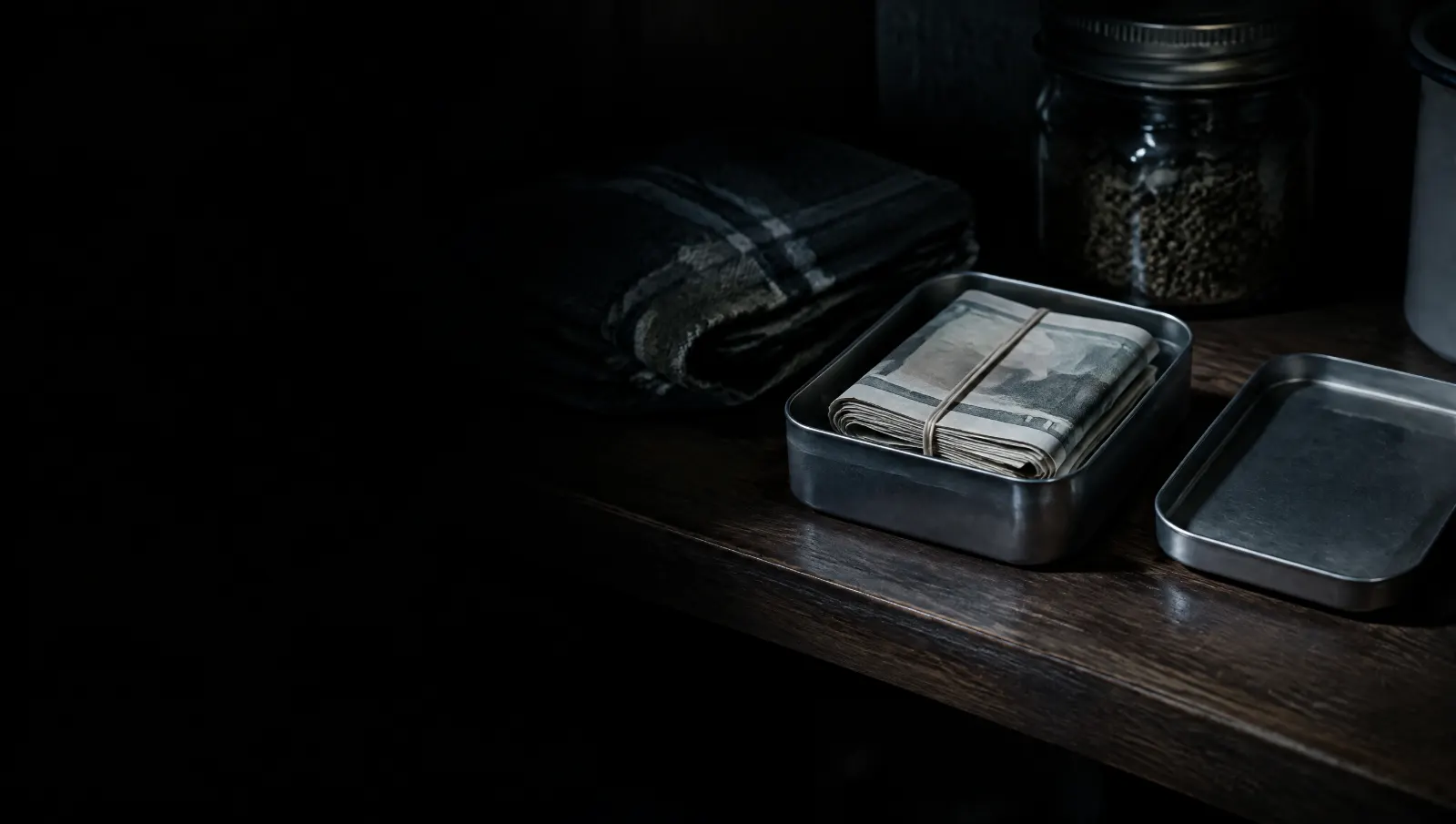
Cash needs a hiding place.
Two to four weeks of spending, in small notes, split across the house.
Split it up
One find should never be all of it.
- SafeThe bulk, bolted down
- Hiding placesTwo or three, in boring rooms
- Off siteA deposit box, or someone you trust
How much, and which
Two to four weeks of spending: one week in the house is the floor.
Small notes to spend: a till with no change cannot break a large one. Keep large notes for the part you hide.
Your own currency first: then dollars or euros, which are taken almost anywhere.
Count it now and then: keep it in step with what you spend.
Cash at home is not covered by deposit insurance: check your household policy's limit.
Where it goes
The bulk in a safe, the rest where nobody looks.
A safe for the bulk
Fire rated, bolted down.
Hidden for the rest
Cans, books and boxes that look like nothing.
- KYODOLED diversion book safe, key lockDecoy layer / Hardback / Shelf blend
- Mealivos fake can diversion safe, weighted metalWeighted / Kitchen / Among identical
- Nite Ize Hideout magnetic key boxMagnet mount / Under metal / Spare key
- BigMouth Spam can safe, weighted to matchScrew base / Cupboard / Weight matters
- Magnetic outlet diversion safe, simple installMagnetic / No wiring / One stack
Questions
- How much cash should I keep at home?
- Two to four weeks of spending. One week is the floor.
- Why small notes?
- When the card machines are down, a till with no change cannot break a large note. Keep the large ones for the part you hide.
- Where should I keep cash at home?
- Split it: the bulk in a safe, the rest in two or three boring rooms. One find should never be all of it.
- Is cash at home insured?
- Not by deposit insurance. Check your household policy's limit for cash before you decide how much to keep.