‹ Guides
Hiding valuables at homeA burglar has ten minutes.
Hiding valuables at homeA burglar has ten minutes.
Make them search for an hour.
Small amounts, ordinary places, scattered through the house.
Where to hide it
Low-priority rooms and boring objects: the places a search skips.
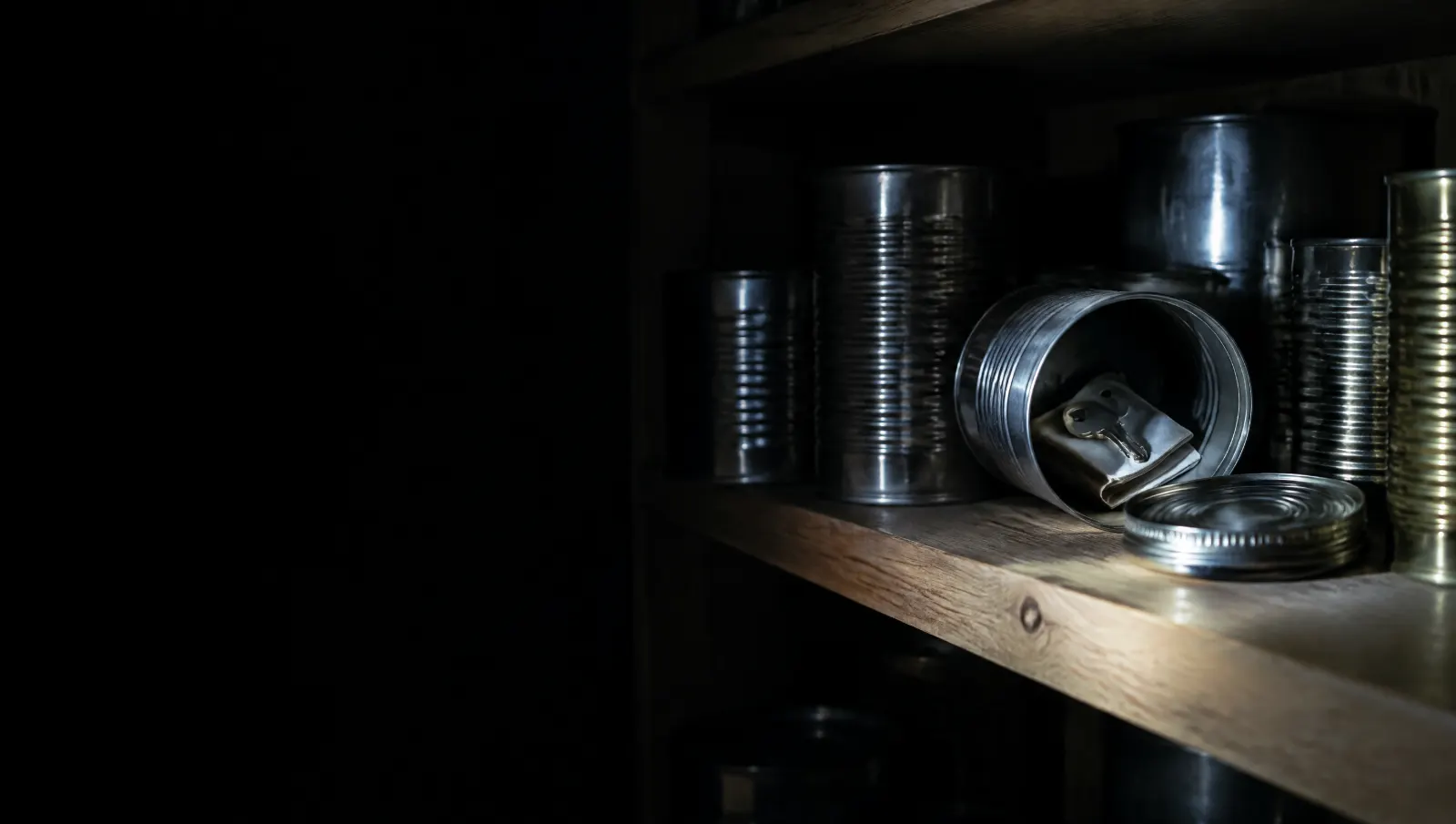
- KitchenFood tins, the cabinet kickboard, an unused appliance
- BathroomA cleaned-out bottle, the panel behind the bath
- LaundryA detergent box, behind the machine
- BookshelfA hollow book among many
- Air ventsTaped inside the duct, airflow kept clear
- Under drawersTaped underneath, not inside
- GarageAn old paint can, a toolbox with a false bottom
- CarBehind a panel, the spare tyre well
How it works
Time is the defence: fifty boring objects take hours to search.
Blend in: a book safe works on a full shelf and fails on an empty one.
Scatter it: small amounts in several places, so one find is not all of it.
Pair it with a real safe: concealment has no fire or water rating.
Never the doormat, the flowerpot or the top of the door frame: those are checked first.
Ready-made hiding places
Bought, they look like something you already own.
Built into the house
Frames, vents and outlets that open.
- Hidden picture frame safe, 8 x 10 inBehind art / 8 x 10 in / Shallow
- Vaultz locking storage chest, dual combinationUnder bed / Dual combination / Steel
- Wall clock with hidden compartment, 10 inWorking clock / 10 inch / Wall height
- Elder Welder air vent wall safeVent cover / Between studs / Combination
- Elder Welder outlet wall safeBetween studs / Real faceplate / Flush
Hidden in plain sight
Books, cans and a key box that look like nothing.
- KYODOLED diversion book safe, key lockDecoy layer / Hardback / Shelf blend
- Mealivos fake can diversion safe, weighted metalWeighted / Kitchen / Among identical
- Nite Ize Hideout magnetic key boxMagnet mount / Under metal / Spare key
- BigMouth Spam can safe, weighted to matchScrew base / Cupboard / Weight matters
- Magnetic outlet diversion safe, simple installMagnetic / No wiring / One stack
Questions
- Where should I hide valuables at home?
- In boring objects in rooms a search skips: a food tin, a detergent box, the panel behind the bath. A burglar has about ten minutes; make every minute a waste.
- Where should I never hide anything?
- Under the doormat, in the flowerpot or on top of the door frame. Those are checked first.
- Do diversion safes work?
- When they blend in. A book safe works on a full shelf and fails on an empty one.
- Should I keep everything in one hiding place?
- No. Small amounts in several places, so one find is not all of it. And a hiding place has no fire rating: what must survive a fire goes in a safe.