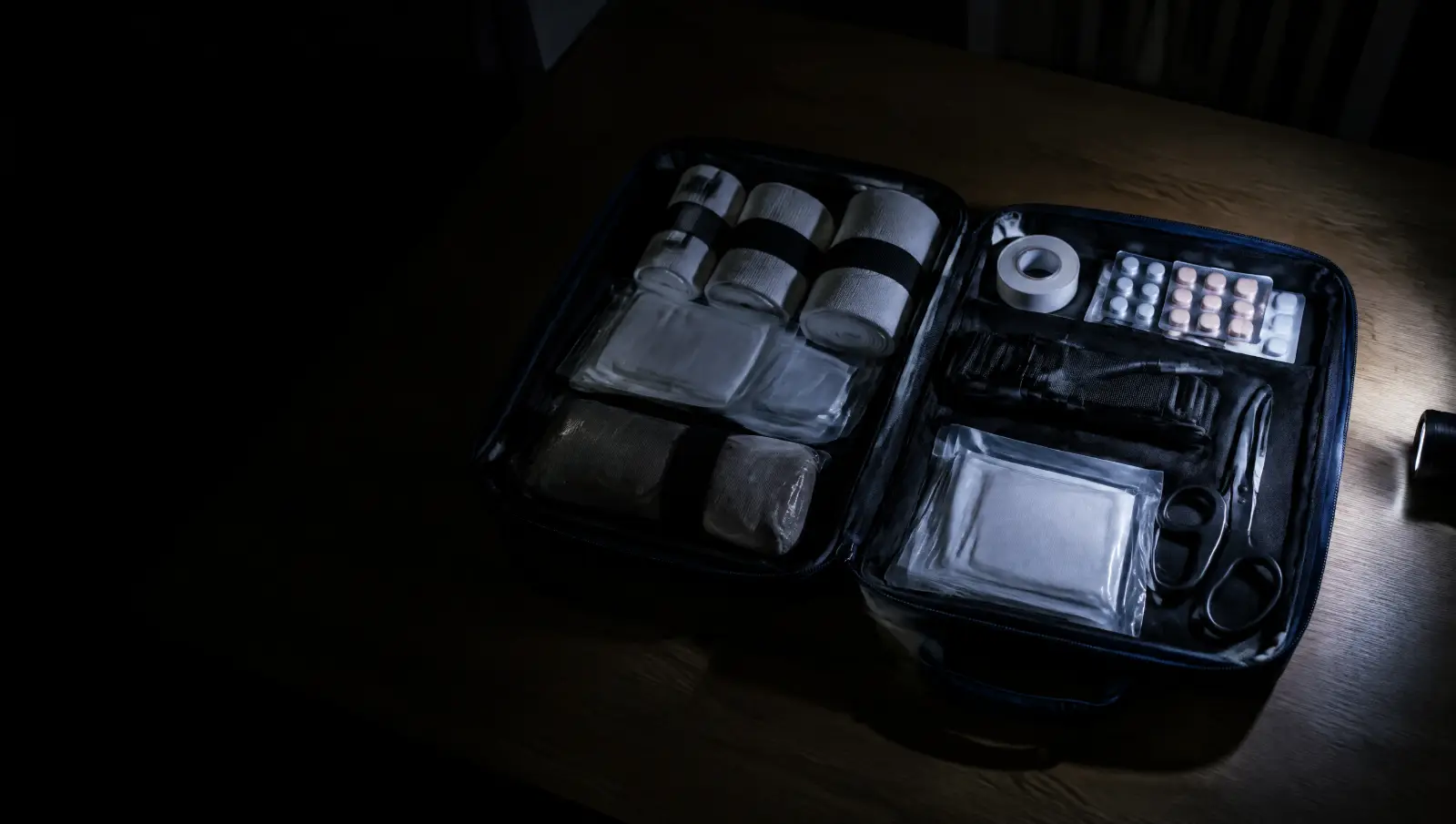
Home first aid kit checklistMost kits are plasters.
Build the rest.
Stocked at home, checked twice a year, learned before you need it.
How to stock it
Build it for the people you live with: their medicines, their allergies, their ages.
Bleeding control before plasters: pressure dressings and a tourniquet matter most when it is bad, so learn to use them before you pack them.
Two kits: a full one at home and a small one you actually carry.
Check it twice a year: medicines expire, and plasters get used and never replaced.
A kit is not training: a first aid course is what makes it useful.
The full list is on paper
The Paranoid Action Plan: print it, fill it in, keep it where everyone can reach it.
01Emergency Action Plan
The first minutes, as steps: get safe, decide to stay or go, then act. Fill in your out-of-area contact and meeting points once, before you need them.
02Documents and Financial Checklist
Identity, money, insurance, property and medical papers, and where every copy lives. When you have to leave, you already know what to take.
03Evacuation Bag Checklist
A complete checklist for building your bag, from water and shelter to a way to call for help. Use it to pack the bag once, then to check it each time you rotate it.
04First Aid Kit ChecklistThis guide
From bleeding control to the medicines your own family needs. Check it against your kit and replace what has run out or expired.
05Emergency Food Supply Checklist
Water, staples, proteins, cooking, and everyone else who eats from the stock. Store what you already eat, so it rotates without effort.
06Growing and Preserving Checklist
Space, seed, tools, preserving, storage, foraging, animals and bees. For food that keeps coming after the stock runs out.
Or buy one ready
A bought kit is a start: open it once and add what is on the list.
The kit for the house
Everything for the house, in one place everyone knows.
- Surviveware Comprehensive, 238 pieces238 pieces / Labelled / MOLLE
- THRIAID 430-piece first aid kit430 pieces / Waterproof / Labelled
- Swiss Safe 2-in-1, 200 pieces200 pieces / Car and home / Bonus mini kit
- VEVOR first aid cabinet, 1000 pieces1000 pieces / Wall mounted / OSHA Class A
- The Survival Doctor's Complete HandbookBook / James Hubbard MD
The kit you carry
Small enough to take every time you leave.
Questions
- What should a home first aid kit include?
- Bleeding control first: pressure dressings and a tourniquet. Then the medicines, allergies and ages of the people you live with. Plasters are the least of it.
- Is a store-bought kit enough?
- Most are mostly plasters. Open one, check it against the list, and add what handles a bad injury.
- Do I need first aid training?
- Yes. A kit without training is a box of supplies. One course is what makes it useful when someone is bleeding and your hands are shaking.
- How often should I check it?
- Twice a year. Medicines expire, and plasters get used and never replaced.